Test Equipment Calibration Tracking for Biomed Shops
Keep every analyzer and simulator your technicians use on a calibration schedule. Log each calibration with its certificate, let Bravio work out the next due date, and get an email before anything goes out of date.

What is test equipment calibration tracking?
Test equipment calibration tracking is keeping a record of every instrument your shop uses to test medical equipment (electrical safety analyzers, defibrillator analyzers, infusion device analyzers, patient simulators, meters) with its calibration interval, its calibration history and certificates, and the date it is next due. It matters because a PM or electrical safety result is only as trustworthy as the instrument that produced it. In Bravio, test equipment is its own module, separate from the customer equipment you service: you set a calibration frequency, log each calibration (done in-house or by an outside lab) with the certificate number, file and result, and Bravio moves the next due date forward and emails your admins a digest when anything is due within 30 days or overdue.
Updated October 22, 2026
Everything included
A Calibration Frequency per Instrument
Monthly, quarterly, semi-annually, annually or biennially. Enter when it was last calibrated and Bravio calculates the next due date, or enter the date from the sticker if that is all you have.
Certificates on File
Every calibration entry carries the date, who performed it (one of your people or a vendor’s name), the certificate number, the certificate file itself and a pass or fail.
Next Due Date, Worked Out for You
Logging a calibration moves Next Calibration Due forward by the frequency. Nobody has to calculate or retype a date.
A Reminder Before It Lapses
Admins get an email digest listing test equipment due within 30 days or already overdue. You can reword the email under Settings, Notifications.
Separate From Customer Equipment
Test equipment belongs to your shop, not to a facility, and it can never end up in the loaner pool. Your analyzers do not clutter a customer’s asset list or their reports.
The Whole Calibration History
Each instrument keeps every calibration it has had, with results and certificates, so the question “was this analyzer in calibration in March?” has an answer on one screen.
What to record for each piece of test equipment
| Field | Why it matters |
|---|---|
| Name, manufacturer, model and serial number | Ties every certificate to one physical instrument, not to “the Fluke”. |
| Calibration frequency | Usually taken from the instrument manufacturer or your own quality procedures. It drives the next due date. |
| Date performed and who performed it | In-house or an outside calibration lab. Calibration is often done externally, so this is free text. |
| Certificate number and certificate file | What a customer or an auditor asks to see. |
| Result: pass or fail | A failed calibration is a quality event. ISO 13485 (clause 7.6) expects you to assess and record the validity of earlier results when measuring equipment is found not to conform, so you need to know when it last passed. |
| Next calibration due | Calculated from the last calibration and the frequency, and the basis for the reminder digest. |
The instruments a biomed shop usually tracks
Your list depends on what you service, but most shops calibrate some or all of these:
- Electrical safety analyzers
- Defibrillator and pacemaker analyzers
- Infusion device analyzers
- Patient simulators: ECG, NIBP and SpO2
- Electrosurgical analyzers
- Gas flow and ventilator analyzers
- Pressure meters, digital multimeters, thermometers and tachometers
Showing which analyzer was used on a job
The Test Equipment module tracks your instruments and their calibration. If you want each service report to name the analyzer used, add a dropdown field listing your instruments to the procedure. It then prints on every report from that procedure, and it costs the technician one tap.
Test Equipment is switched on for your account on request. Ask for it during setup.
Who tracks test equipment calibration in Bravio?
- Independent biomed shops whose customers ask for calibration certificates with PM reports
- ISOs running electrical safety and performance testing across many sites
- In-house HTM departments with their own analyzers and simulators
- Shops whose calibration dates currently live on stickers and a spreadsheet
How we work with you
Bravio is built around how your shop actually runs.
Not around how software companies assume it runs. The product is shaped by real service weeks inside independent biomed shops — their PM lists, their inspection forms, their report layouts. Yours get the same treatment.
We start by watching you work
A 30-minute session where you walk us through a real week — the PM list, the paper checklists, the spreadsheet nobody wants to touch. No slide deck.
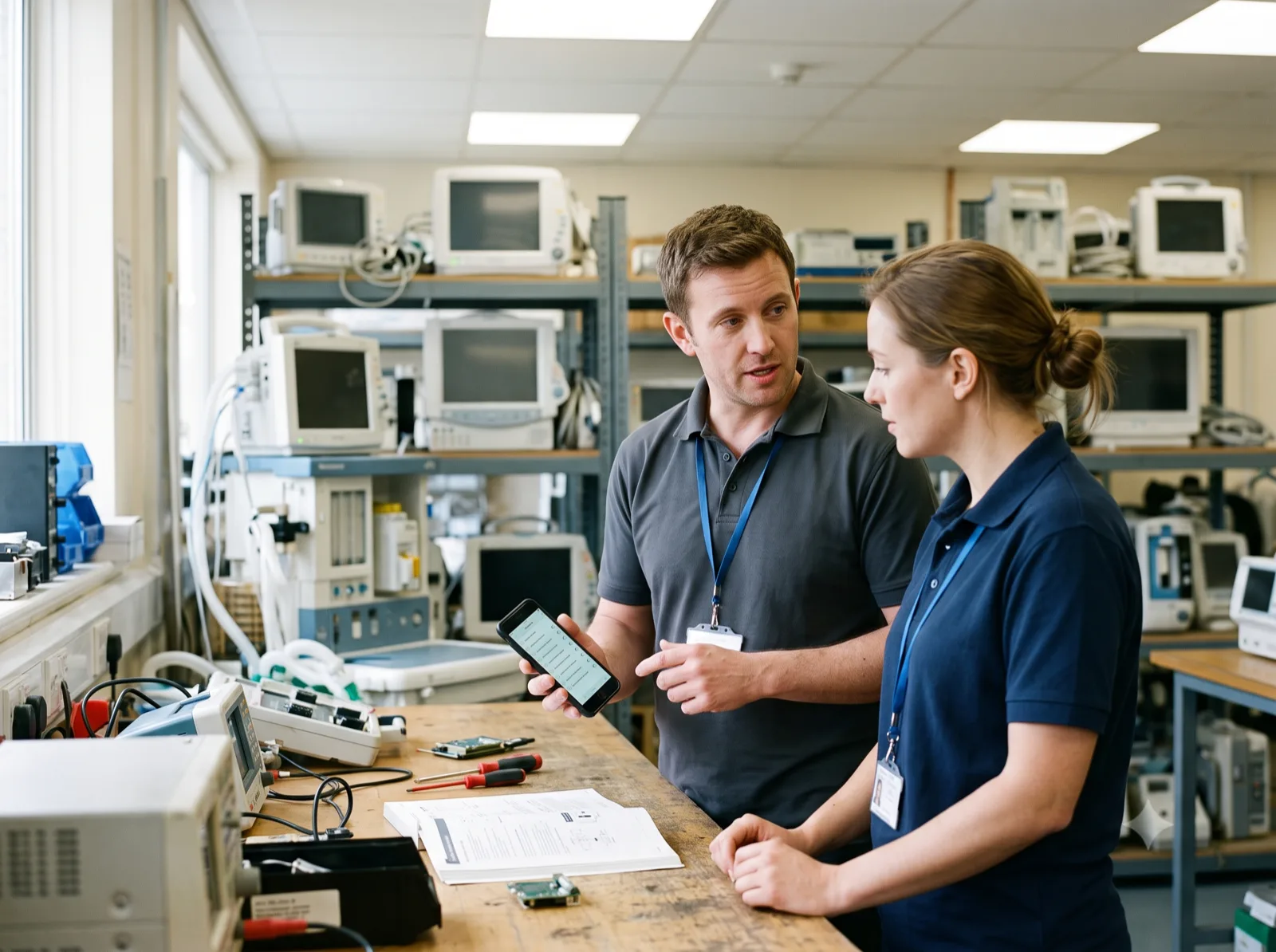
Your workflow shapes the roadmap
If your inspection form, report layout, or PM cadence does not fit what we have built, we change the product. You see it ship in weeks, not quarters.
You talk to the people writing the code
No account manager, no ticket queue, no support tier. A direct line to the team building Bravio.
Your data stays yours
Import from spreadsheets, export everything whenever you want. If Bravio is not the right fit for your shop, we will tell you on the call.
What to expect
Book a 30-minute working sessionYou will be talking to the team that builds Bravio — not a sales rep.
- Asset registry, work orders, PM schedules, rapid inspections, signed and audit-trailed service reports, and invoicing — all in production today.
- The people building Bravio are the people you deal with. No account manager in between.
- We go through pricing openly on the first call, sized to the shop you actually run. Flat plans, no per-user tiers, no implementation fees.
- Bring your equipment list and your report format. You will see Bravio running on your own data before you commit to anything.
Frequently Asked Questions
Can Bravio track calibration for an electrical safety analyzer?
Yes. Add the analyzer as test equipment with its serial number and a calibration frequency. Each time it is calibrated, log the date, who did it, the certificate number and file and the result, and Bravio moves the next due date forward automatically.
Does Bravio remind us before a calibration is due?
Yes. Admins receive an email digest listing every piece of test equipment that is due within 30 days or already overdue. The email’s subject and body can be edited under Settings, Notifications.
Can we record calibrations done by an outside lab?
Yes. The “performed by” field is free text, so it can name an outside calibration vendor as easily as one of your technicians, and the certificate file is stored with the entry.
Is test equipment mixed in with our customers’ assets?
No. Test equipment belongs to your shop rather than to any facility, is tracked on its own page, and is never part of the loaner pool.
Can a service report show which test equipment was used?
Yes, by adding a dropdown field listing your instruments to the procedure. The technician picks the analyzer they used and it prints on the report.
Why do hospital customers care about my test equipment calibration?
Because surveyors review the hospital’s equipment maintenance records, and when an outside shop does the testing, the results came from that shop’s instruments. Calibration certificates for the analyzers and simulators used are one of the things a hospital may ask its service vendor to produce during survey week.
Evaluating alternatives? See how Bravio compares to TruAsset, MaintainX, BlueFolder & more →
One place to run
your biomed repair shop.
We set up your workspace and move your data over, free. Log in within one business day. No card.
See how we work →